
When comparing 2-piece vs. 3-piece golf balls, the real question is not which construction is more advanced. It is which design better fits your swing, playing conditions, and purchasing goals. Two-piece balls usually emphasize durability, lower spin, and cost-effectiveness. Three-piece balls add a mantle layer, giving designers more room to tune iron play, short-game response, and feel.
Traditional advice often treats two-piece balls as beginner products and three-piece balls as options for skilled players, but that distinction is too simple. Cover material, compression, dimple design, swing characteristics, and course conditions can all change the result. This guide compares construction, performance, testing methods, and bulk-purchasing considerations to help both golfers and bulk buyers make a more reliable choice.
Quick Answer: The Main Difference Between 2-Piece and 3-Piece Golf Balls
A two-piece golf ball consists of a core and a cover. Its straightforward construction is commonly designed to transfer impact energy efficiently, reduce unnecessary spin, and improve wear resistance. A three-piece golf ball adds a mantle between the core and cover, allowing different materials to play separate roles in driver speed, iron flight, and short-game friction.
Start with your priorities when choosing between a 2-piece and 3-piece golf ball. If budget, durability, lost-ball rate, and driver dispersion matter most, a two-piece ball is often the more practical choice. If you care more about iron stopping power, predictable rollout on chips, and a softer response, a three-piece ball is usually worth testing first.
| Comparison | Typical 2-Piece Ball | Typical 3-Piece Ball | How to Decide |
|---|---|---|---|
| Construction | Core + cover | Core + mantle + cover | Layer count describes the architecture, not a quality ranking |
| Driver performance | Usually lower spin, with an emphasis on efficiency and stability | Multiple layers can tune spin and response | Compare average distance and dispersion, not the single longest shot |
| Short-game control | Often releases more; stopping behavior depends on the design | Usually offers more scope to balance iron and greenside control | Confirm the cover material as well as the layer count |
| Feel | Often more direct and firmer | Often softer, with a more layered response | Sound and feel are personal; test both |
| Durability | Commonly offers good wear resistance | Soft-cover models may show wedge marks sooner | Run wear tests for practice and event use |
| Cost position | Often suited to price-sensitive and high-loss settings | Often used for control-oriented or upgraded products | Consider the target market, selling price, and expected service life |
What Do 2-Piece and 3-Piece Mean in a Golf Ball?
How Two-Piece and Three-Piece Golf Balls Are Built
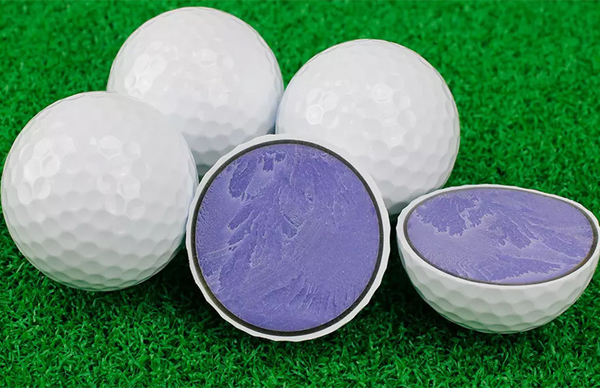
A typical 2-piece golf ball uses a large resilient core protected by an outer cover. The core stores and releases energy at impact, while the cover provides wear resistance, the aerodynamic surface, and the way the ball interacts with the clubface. Although the construction is simple, material formulas and dimple designs can still create substantial differences between two-piece models.
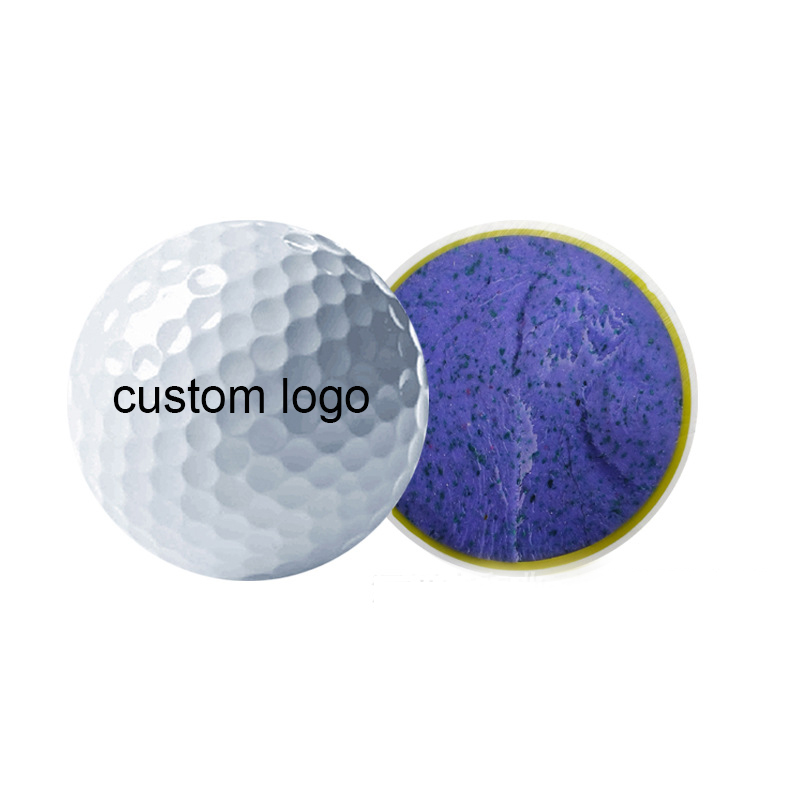
A typical 3-piece golf ball adds a mantle between the core and cover. This layer does more than increase thickness. It gives designers another way to tune how the ball responds to high-speed driver impacts and lower-speed shots with irons and wedges while helping produce a more consistent overall feel.
Why an Extra Layer Does Not Automatically Mean a Better Ball
During a driver swing, the core and mantle work together to influence ball speed, launch, and spin. On shorter shots, the cover and mantle combination has more influence on friction, launch height, and the way the ball reacts after landing. The value of a three-piece construction lies in its wider tuning range, not in an automatic advantage in every performance category.
A well-designed two-piece ball may suit you better than a poorly matched three-piece model. Treat layer count as one aspect of the ball’s design, then consider the cover, compression profile, manufacturing consistency, and actual test results. A “3-piece” label alone does not prove that a ball will be longer, spin more, or last longer.
How 2-Piece and 3-Piece Golf Balls Perform
Driver Distance and Ball Speed
Two-piece models are often called distance balls because their large cores and lower-spin designs can produce direct, stable driver performance. Modern three-piece balls, however, can also transfer energy efficiently. For many golfers, the difference in average distance between the two constructions may be smaller than the variation caused by strike location, face angle, and launch conditions.
Do not compare distance by recording only the longest shot. Hit the same number of two-piece and three-piece balls, then compare average carry, total distance, and playable landing areas. A model that occasionally flies a few yards farther may not help your score if it also produces wider dispersion or less predictable landing and rollout.
Driver Spin and Directional Stability
The lower-spin profile of a typical 2-piece golf ball can reduce shot curvature for some players and help more drives finish in playable areas. A golf ball cannot correct swing-path or clubface problems, however. A three-piece ball can use its mantle to manage spin across different clubs, but its directional stability still depends on the specific model and your impact conditions.
Iron Flight and Landing Behavior
An iron comparison should include peak height, landing angle, first bounce, and final stopping position—not just carry distance. Three-piece golf balls usually offer more tuning options for combining long-game efficiency with short-iron control. A two-piece ball may release more after landing, but that behavior can be predictable on soft greens or when your intended shot calls for rollout.
Wedge and Greenside Control
The easiest place to feel the difference between two-piece and three-piece balls is often on half swings, chips, and pitches. A three-piece ball with a softer cover and a short-game-oriented design will often grip more and stop faster. A typical two-piece ball is generally better suited to shots intended to land and release forward.
Layer count is not the only factor in short-game control. Groove cleanliness, strike quality, grass conditions, and cover material all affect friction. A three-piece model with a durability-oriented cover may behave differently around the green than a three-piece urethane-covered ball, so confirm the complete construction when buying or testing samples.
Putting and Short-Game Feel
What golfers describe as “soft” may come from compression, cover contact, impact sound, or vibration. Three-piece balls are often designed to feel softer, but not every three-piece ball is soft and not every two-piece ball is firm. Test both with the same putter from several distances and compare initial speed, sound, and the ease of controlling distance.
Durability and Cover Wear
High-frequency practice, driving ranges, and corporate events usually place more value on wear resistance and service life. Ionomer covers commonly withstand repeated impacts and surface abrasion well, while softer covers may show wedge marks sooner. Actual durability still depends on the material, coating, and production quality, not simply whether the ball has two or three pieces.
Price and Long-Term Value
Three-piece construction usually requires a greater variety of materials and more manufacturing steps, so its market price is often higher than that of a basic two-piece ball. Buyers should compare more than the unit price. Lost-ball rate, expected number of uses, target retail price, return risk, and end-user experience all matter. In high-loss settings, a durable two-piece ball may provide a lower cost per use.
Cover, Compression, and Dimples Matter as Much as Layer Count
Ionomer and Urethane Covers
Ionomer covers generally favor durability and lower spin, while urethane covers more often support softer feel and greenside friction. These are broad design tendencies rather than guarantees. The cover must work with the core, mantle, and overall firmness, so neither “urethane is always longer” nor “ionomer offers no control” is a reliable conclusion.
Compression and Swing Speed
Compression helps describe how firm a ball feels under load, but it does not determine distance by itself. Players with slower swings are not limited to low-compression balls, and faster swingers do not always need a high-compression model. A better test compares feel, launch, spin, and dispersion together.
Dimple Design and Complete Specifications
Dimple count, depth, edge shape, and pattern affect airflow, but consumers cannot reliably predict flight from one number. Two three-piece golf balls can produce different trajectories when their dimple geometry and material formulas differ. For bulk orders, request samples of the exact model and test flight stability under realistic conditions.
YHogolf’s product range includes two-piece, three-piece, and other multilayer golf balls, with Surlyn-type and PU cover options. Confirm layer count, cover, compression, dimples, color, logo, and pearl cotton packaging for each order. Buyers should not apply one general specification sheet to every customized version.
Who Should Consider a 2-Piece Golf Ball?
Four Situations Where a 2-Piece Ball Is Worth Testing First
- Budget concerns or frequent lost balls: If you lose several balls during a typical round, you may not use a higher-priced three-piece ball long enough to benefit from its short-game characteristics. A two-piece golf ball makes it easier to stay with one model and a consistent feel while reserving more of your budget for practice, lessons, or additional rounds.
- Too much driver spin: If excessive curvature is your main problem off the tee, start by testing a lower-spin 2-piece golf ball. It may reduce shot curvature, but a ball can only moderate the result. It cannot replace swing work or professional instruction when face angle and swing path repeatedly create side spin and pronounced curvature.
- Beginners and high-frequency practice: New golfers need repeated swings to develop reliable contact, making a durable and affordable two-piece ball a practical fit. Driving ranges also care about appearance and flight after repeated impacts. A simple construction with a wear-resistant cover is common, but repeated-impact testing and batch sampling should confirm long-term performance.
- A release-oriented short game: If you prefer a low chip-and-run that lands near the front of the green and releases toward the hole, the rollout of a typical two-piece ball may suit your technique. If you frequently need to carry hazards and stop the ball quickly, include three-piece constructions and short-game-oriented covers in your test.
Who Should Consider a 3-Piece Golf Ball?
Four Situations Where a 3-Piece Ball Is Worth Testing First
- More iron stopping power and short-game control: If your driving is already steady but approach shots often roll beyond the target, the additional tuning range of a three-piece golf ball can be useful. It is often designed to balance long-game efficiency with short-game response, allowing you to use one ball from the tee through putting.
- Consistent ball striking: A three-piece ball does not automatically give a player more control. Subtle differences in flight and spin become useful only when contact is repeatable. Handicap is only a rough guide; your ability to manage strike, landing area, and short-game technique matters more when evaluating test results.
- Firm, fast greens: Extra rollout magnifies distance errors on dry, firm, or fast greens. In these conditions, a control-oriented 3-piece golf ball may help iron and wedge shots stop sooner. The same advantage may be less noticeable on soft, slow greens.
- Preference for feel and control at a higher price: A higher-priced three-piece ball can make sense when your playing needs or personal preferences place greater importance on softer feel and greenside performance. For brands and bulk buyers, the target market and retail price should support the upgrade, and sample testing should reveal a difference that end users can actually notice.
How to Test 2-Piece and 3-Piece Golf Balls
Control as many variables as possible. Test both types of golf ball on the same day under similar temperature and wind conditions, use the same clubs, and make sure the samples have comparable wear. Record several shots for each test. If you remove obvious mishits, note why rather than keeping only the shots that support your expectation.
Driver and Iron Testing
Hit several groups with both constructions and record carry distance, total distance, left-to-right dispersion, and the percentage of shots that finish in playable areas. If you do not have a launch monitor, use range targets or course markers. The key question is not which ball produced the longest shot, but which group produced the tighter pattern.
Choose a mid- or short iron that you strike consistently and aim at the same area of the green. Record the landing point, height of the first bounce, forward release, and final position. When carry is similar between the two constructions, stopping behavior often provides the clearest evidence of which ball fits the course.
Short-Game and Putting Tests
Choose a specific landing spot on a flat practice area. Use the same club and motion to land each ball near the mark, then compare rollout. You are not trying to produce one perfect shot; look for a repeatable difference across several attempts to determine which golf ball fits your normal short-game technique.
Half swings can highlight how the cover and overall construction affect launch, spin, and landing behavior. Record launch height, first bounce, and how quickly the ball releases. If a three-piece ball stands out only on one perfect strike while the two-piece model produces more predictable average distances, repeatability should still drive your choice.
Alternate two-piece and three-piece golf balls from short, medium, and long putting distances. Note whether impact sound changes your pace judgment, whether long putts repeatedly finish short or long, and which response inspires more confidence on short putts. Feel has no universal answer; consistent results matter more than a first impression.
Durability and Recordkeeping
After the wedge, bunker, and full-swing tests, clean each ball and inspect scratches, paint loss, dimple edges, and logo condition. Bulk buyers should compare several samples rather than inspecting a single ball. If wear varies significantly between samples, ask the manufacturer to clarify materials, coating, and batch controls.
How Brands and Bulk Buyers Should Choose
For brands, retailers, and bulk buyers, performance is only one part of the decision. Product positioning, customization, batch consistency, quality control, and total cost should also guide the selection process.
Define the End-Use Scenario First
Retail brands, club membership programs, corporate gifts, tournament play, and driving ranges do not share the same selection criteria. Before buying 2-piece vs. 3-piece golf balls, define the user, playing frequency, target price, presentation, and whether the product is intended for formal competition. Then set performance and customization priorities.
Purchasing Priorities for Two-Piece and Three-Piece Balls
Two-piece balls fit price-sensitive, high-loss, and high-frequency settings, but a low price cannot replace quality control. Buyers should check consistency, wear after repeated use, color variation, logo durability, and packaging damage, then use samples from the intended batch to evaluate performance after repeated use—not only the initial appearance.
Three-piece balls are often used to deliver a more premium playing experience and support higher retail price points. In addition to confirming the cover and construction, buyers should test short-game response and putter sound, then determine whether the product’s market positioning aligns with the target price. If end users cannot perceive a control benefit, layer count alone will not support repeat purchases.
Sample and Customization Validation
A purchasing manager preparing a private-label ball for a club could select two-piece and three-piece candidates, then ask golfers of different skill levels to record driver dispersion, chip rollout, and cover wear. The final decision should reflect the results that best fit the members’ use case, not which sample carries the highest price.
Logo size, number of colors, print location, coating, and cover material can all affect appearance and durability. YHogolf can discuss color, logo, and packaging options based on project requirements, but the production process, tolerances, sample quantity, and production standards should be confirmed before ordering. Final production should then be evaluated against an approved sample.
Information to Prepare Before Requesting a Quote or Sample
- Describe the product’s purpose, target market, and primary users so the manufacturer can recommend a two-piece or three-piece direction.
- Provide the target price range, estimated quantity, and sales channel so the product configuration aligns with its intended market positioning.
- Rank distance, spin, feel, durability, and eligibility for tournament play in order of importance, and identify any mandatory project requirements.
- Submit the logo, color, and packaging requirements, and confirm the sampling, testing, delivery, and acceptance process.
Batch Consistency and Quality Control
Production lots should be evaluated and accepted based on mutually approved specifications and samples. Weight, diameter, appearance, dimples, printing, packaging, and performance test methods must be defined for the specific order. If the project involves tournament play or target-market standards, ask the manufacturer for the applicable documents and verify the exact model rather than relying on broad claims.
Common Myths About 2-Piece vs. 3-Piece Golf Balls
Five Common Myths
- Myth 1—Three-piece balls always fly farther: Distance depends on the complete ball design, clubhead speed, launch angle, spin, and quality of contact. Some golfers achieve good distance with a three-piece ball, while others are more consistent with a lower-spin two-piece model. Compare averages across several shots instead of predicting the winner by layer count.
- Myth 2—More layers always mean a better ball: Extra layers provide more tuning options, but they also increase design and manufacturing complexity. A multilayer ball does not guarantee a better experience when the positioning, material combination, or quality control is weak. For ranges and promotional programs, a durable, consistent, and affordable two-piece ball may be the better fit.
- Myth 3—Two-piece balls are only for beginners: Some experienced golfers continue to choose 2-piece golf balls because they value lower spin, durability, forward release, or lower replacement cost. Handicap provides only a rough measure of ability and says little about course conditions, common misses, or short-game style. A two-piece ball is a valid choice whenever its actual performance fits the goal.
- Myth 4—Slower swingers cannot use three-piece balls: Swing speed affects how a golf ball responds, but it does not determine layer count by itself. Three-piece models use different cores, covers, and compression profiles, and a slower swinger may still benefit from the feel or short-game control of a suitable design. Test launch, spin, and dispersion instead of excluding every three-piece ball based on one speed label.
- Myth 5—More spin is always helpful: Greenside spin can help a ball stop, but excessive driver spin may increase curvature or reduce effective distance. The right golf ball needs a workable balance across the full range of clubs: suitable flight with longer clubs, predictable iron-shot landing performance, and controllable rollout or stopping behavior on shorter shots.
Quick Decision: Should You Choose a Two-Piece or Three-Piece Ball?
If you are still undecided, work backward from the problem you most want to solve. Decide whether driver playability, iron stopping power, chip rollout, durability, or cost matters most. Then select two candidates within your budget and compare them using the tests above. Layer count is a screening tool; repeatable results should determine the final choice.
- Start with a two-piece golf ball when cost, durability, frequent practice, or a lower-spin profile is the priority.
- Start with a three-piece golf ball when iron stopping power, greenside control, and softer feedback are the priority.
- For a brand or bulk-purchasing project, define the application and price range before asking the manufacturer for samples of each construction.
- If the test results are similar, choose the option with dependable supply, consistent batch quality, and the lower total cost.
YHogolf can discuss two-piece and three-piece golf ball options for brands, tournaments, practice programs, and gift projects. Cover, color, logo, and packaging should be confirmed for the specific order. Providing the target market, quantity, performance priorities, and use case in your inquiry will help identify suitable samples more efficiently.
Frequently Asked Questions
Do 2-Piece Golf Balls Go Farther Than 3-Piece Golf Balls?
Not necessarily. Typical two-piece balls often emphasize distance efficiency and lower spin, but modern three-piece balls can also deliver solid driver distance. Results depend on the complete ball design and your impact conditions. Compare average carry, total distance, and dispersion rather than relying on layer count alone.
Are 3-Piece Golf Balls Worth the Extra Cost?
They may be if you see repeatable improvements in iron stopping power, chip rollout, or putting feel. If you lose balls often, primarily use them for practice, or cannot detect a meaningful performance difference, a more affordable and durable two-piece ball is usually the practical choice.
Is a 2-Piece or 3-Piece Golf Ball Better for Beginners?
Most beginners can start with a two-piece ball because cost and durability are easier to manage, but this is not a strict rule. A beginner who already prioritizes short-game practice and prefers softer feedback can also test three-piece options. Staying with one model for a period of time helps reduce the variables created by frequent changes.
Do 3-Piece Golf Balls Spin More Around the Green?
Many three-piece balls are designed with greater emphasis on greenside spin, but cover material, surface condition, and the overall construction and material formula are also important. A three-piece construction does not guarantee high spin. Check the specific cover and intended performance profile, then verify the response with short-game testing.
Is Every Urethane Golf Ball a 3-Piece Ball?
No. Urethane describes a cover material, while 3-piece describes the number of construction layers. They are not the same characteristic. Urethane-covered balls can use different layer counts, and three-piece balls can use other cover materials. Confirm both construction and cover when comparing products.
Which Construction Is Better for Custom Logo Golf Balls?
Print suitability depends mainly on the cover, coating, artwork size, colors, and printing process—not only on whether the ball has two or three pieces. Ask the manufacturer to produce a sample of the exact ball, then check color accuracy, edge definition, impact wear, and batch consistency before approving production.
What Should a Bulk Buyer Provide Before Requesting Samples?
Provide the intended use, target audience, market, price range, estimated quantity, performance preferences, logo file, colors, packaging requirements, delivery needs, and applicable standards. Complete information makes it easier for the manufacturer to recommend suitable 2-piece or 3-piece golf ball samples.
Conclusion
Two-piece balls offer practical value in durability, cost, and lower-spin designs. Three-piece balls provide more options for combining materials and tuning performance, often with greater emphasis on iron play, short-game response, and feel. Neither construction is the universal winner. Base your choice on common misses, course conditions, expected service life, and budget.
If you plan to develop a private-label golf ball, share your project requirements with YHogolf so both parties can identify suitable two-piece and three-piece options for evaluation.