
When you search for “Top 10 Golf Ball Brands,” you will often find tour exposure, retail popularity, player feedback, and price-based opinions mixed. A useful list should do more than name the best-known brands. It should explain how each brand is positioned, which product lines represent it, and which golfers or purchasing projects it may suit.
This guide uses publicly available product information and considers brand recognition, product-line coverage, purchasing channels, and different use cases. It brings together ten golf ball brands worth knowing first, helping golfers and buyers build a more focused shortlist.
Top 10 Golf Ball Brands at a Glance
The table below compares the ten brands within one framework. The representative lines help clarify product positioning, but not every model is available in every market. Confirm current versions, pricing, and availability with the brand or a local sales channel.
| Brand | General Positioning | Representative Lines | Main Characteristics | Best Suited To |
|---|---|---|---|---|
| Titleist | Established premium and tour-focused brand | Pro V1, Pro V1x | Consistent premium positioning and broad recognition | Golfers and buyers prioritizing performance, selection, and brand recognition |
| Callaway | From premium to mainstream price points | Chrome Tour, Supersoft | Broad range, varied feel, and visual options | Users comparing several positions within one brand |
| TaylorMade | Premium performance with strong marketing exposure | TP5, TP5x | Tour visibility and a speed-and-control position | Users interested in premium models and marketing value |
| Srixon | Tour performance and value coverage | Z-Star, Q-Star, Soft Feel | Multiple price tiers and a clear selection path | Golfers balancing performance, feel, and budget |
| Bridgestone | A fitting-led product approach | Tour B, e series | Narrows choices according to player characteristics | Golfers who value the fitting process and model suitability |
| Vice | Online-first sales and contemporary design | Pro, Tour, Drive, and other lines | Design, color selection, and a value proposition | Users who prefer online buying, personal expression, or personalization |
| Maxfli | A performance-value option in the U.S. market | Tour line | Performance positioning balanced with price | Value-focused buyers with reliable access to the retail channel |
| Kirkland Signature | A budget option sold through a membership retailer | Kirkland Signature Golf Ball | Lower playing cost and convenient bulk purchasing | Budget-conscious recreational golfers with higher ball consumption |
| Wilson | An established multi-sport and golf brand | Staff Model, Triad, Duo Soft | Brand heritage and products across several levels | Users who value a traditional brand or softer-feel options |
| Mizuno | A golf ball line within a Japanese equipment ecosystem | Pro S, Pro X, RB Max, RB 566 | Feel-led positioning and equipment-brand continuity | Golfers who value Japanese brands or already use Mizuno equipment |
The Top 10 Golf Ball Brands
1. Titleist
Titleist has strong global recognition in the golf ball category. Its tour presence and extensive retail distribution often make it a reference point for premium golf balls. Pro V1 and Pro V1x are its best-known lines, closely associating the brand with tour-level positioning, consistent performance expectations, and a well-established product-selection framework.
If brand recognition, dependable replenishment, and a clear product hierarchy matter to you, Titleist is usually worth testing early. Buyers can also use its familiarity to communicate value to end users, although the premium attached to the name makes real-world testing more important than choosing by reputation alone.
2. Callaway
Callaway’s strength is breadth. The Chrome Tour line serves premium performance needs, while products such as Supersoft emphasize an accessible feel and broader everyday use. Multiple price points and visual options let golfers narrow their choices within one familiar brand.
For retailers, event buyers, and corporate gift programs, Callaway’s broad recognition and distribution can reduce the amount of explanation required. However, its lines differ significantly in positioning. Purchase documents should identify the exact model, color, packaging, and version rather than treating “Callaway golf balls” as one specification.
3. TaylorMade
Supported by its club business, tour-player partnerships, and professional-event exposure, TaylorMade has built a distinct image in the premium golf ball market. TP5 and TP5x are its representative lines. The brand typically communicates around ball speed, control, and all-around competitive performance, while also offering visual designs that can improve identification or alignment.
TaylorMade can appeal if you want a premium experience and prefer your golf ball to match the broader brand identity of the equipment in your bag. Its marketing value can also benefit event or retail programs. Even so, testing remains the best way to judge whether the feel, flight, and short-game response suit the intended player.
4. Srixon
Through Z-Star, Q-Star, and Soft Feel, Srixon covers different price points and playing needs, creating a relatively clear progression between tour positioning and mainstream value. The brand has distribution across Asia, North America, and Europe, so it appears regularly in specialist equipment discussions and also gives budget-conscious golfers practical options to compare.
For golfers who do not want to choose strictly between premium performance and value, Srixon offers a logical selection path. Start by deciding whether short-game control, overall feel, or durability and playing cost matter most to you, then test the corresponding line instead of automatically starting with the brand’s most expensive model.
5. Bridgestone
A defining feature of Bridgestone’s golf ball positioning is its long-standing emphasis on fitting rather than on a single flagship product. Tour B and the e series serve different player types. The brand often explains how swing characteristics and playing needs relate to ball selection, reinforcing why one model cannot suit every golfer.
Bridgestone belongs on the test list if you prefer a more methodical way to narrow your options. Buyers can also turn this fitting approach into better inquiry questions: learn the customer’s playing level, use case, and budget before recommending a line. That is usually more useful than asking only which brand the customer wants.
6. Vice
Vice built recognition through direct-to-consumer online sales, contemporary visual design, and clear price communication. Its portfolio covers several playing levels, while color, pattern, and personalization options attract golfers who want a more personal look. It is often viewed as an online-first, design-led alternative to traditional major brands.
- Before you buy: Vice is attractive if you prefer online purchasing and value design, gifting appeal, or small-quantity personalization. Retailers and cross-border buyers should still confirm shipping, taxes, replenishment, and after-sales conditions, because a direct-sales model does not provide the same purchasing convenience in every region.
7. Maxfli
Maxfli receives attention in the U.S. golf retail market for balancing performance and value, and its Tour line often appears in equipment testing and value discussions. Its appeal is not simply a lower price; it gives some committed golfers access to a more performance-oriented ball while keeping spending under control.
- Channel note: Maxfli is easier to source through its primary U.S. retail network, but international buyers should not assume that local availability will be equally stable. If you need ongoing retail inventory or event replenishment, verify supply, delivery timing, and consistency across future batches first.
8. Costco Kirkland Signature
Supported by Costco’s membership retail model, Kirkland Signature has generated broad interest through a relatively low cost per ball. Compared with specialist brands that offer many golf ball lines, its selection is more concentrated and its buying proposition is more direct: support everyday play and frequent ball replacement while keeping costs under control.
- Best fit: Kirkland Signature may suit budget-conscious recreational golfers or players who frequently lose balls. It may be less suitable for buyers who need a wide model range, specialist fitting support, or dependable supply across multiple regions.
- Before procurement: Event and promotional buyers should also confirm current stock, packaging formats, and customization feasibility. Retail price alone does not represent the total project cost.
9. Wilson
Wilson has a long history in sporting goods and golf equipment, and consumers around the world recognize the name. Its golf ball portfolio includes Staff Model, Triad, and Duo Soft, covering players who want to compare premium performance, balanced all-around play, or a softer feel.
Wilson’s global recognition as a multi-sport brand should not be treated as identical to its share of the golf ball category. It remains an established brand worth considering, but buyers should assess actual local distribution, player awareness, and demand for specific lines rather than converting overall brand recognition directly into assumed sales.
10. Mizuno
Mizuno draws trust from its Japanese sporting-goods heritage and established position in golf equipment. Its current golf ball portfolio includes Pro S, Pro X, RB Max, and RB 566, giving golfers who already know Mizuno clubs or equipment a way to compare feel and performance positioning within the same brand family.
Compared with the golf ball category’s most dominant specialist brands, Mizuno’s influence in this particular segment is still developing. It may suit golfers who value Japanese brand heritage, coordinated equipment, or a specific feel. Cross-market buyers should also confirm local availability and future replenishment before committing.
How to Choose the Right Golf Ball Brand
Start With Your Playing Needs
Begin by grouping your needs. For tour-level positioning and all-around competitive performance, compare Titleist Pro V1 or Pro V1x, TaylorMade TP5 or TP5x, Callaway Chrome Tour, Srixon Z-Star, and Bridgestone Tour B. Then test flight, feel, and short-game response.
If you prioritize a softer feel and accessible everyday play, compare Callaway Supersoft, Srixon Soft Feel, and Wilson Duo Soft in one group. They come from different brands, and the experience will still vary by model and player, so do not decide from the word “Soft” alone.
For stronger visual design or an online-first buying experience, consider Vice. Golfers who already use Mizuno clubs or prefer a Japanese equipment ecosystem can also test Mizuno Pro S, Pro X, RB Max, or RB 566. Building a shortlist around actual playing needs is more efficient than choosing blindly among ten brands.
If you practice frequently, lose balls often, or need to control long-term playing costs, add Maxfli Tour and Kirkland Signature to your shortlist. With Maxfli, check the local retail channel; with Kirkland, account for membership access, inventory, and a more concentrated model selection.
Compare Performance With Budget
When comparing budgets, group brands by buying scenario. Titleist, the TaylorMade TP5 line, and Callaway Chrome Tour commonly enter premium shortlists. Srixon Q-Star and Wilson Triad can be compared with mid-priced alternatives, while Maxfli Tour, Vice, and Kirkland Signature often attract value-focused buyers.
Bridgestone Tour B and Mizuno Pro S or Pro X should also be placed in the appropriate price group based on actual local pricing and availability. Brand positioning cannot replace landed cost, especially for cross-border purchases where taxes, shipping, and future replenishment also matter.
These groups are not fixed price tables. Promotions, regional taxes, and channel structure can change real costs. Vice’s online shipping, Maxfli’s concentrated retail channel, and Kirkland’s membership model can all affect the final price. Compare cost per round and ease of replenishment, not only the price printed on one box.
Check Availability and Consistency
If you want to keep using the same line, Titleist, Callaway, TaylorMade, Srixon, and Bridgestone are generally easier to research and replenish through established golf channels, although individual models still vary by country. Wilson and Mizuno also require a local distribution check; overall brand awareness is not a substitute for real inventory.
Vice relies mainly on online sales and regional websites. Maxfli is easier to obtain through its primary U.S. retail network, while Kirkland Signature depends on Costco membership channels and current inventory. For international retailers and event buyers, these channel differences matter more than the brand ranking itself.
For Custom or Private Label Orders
If you are sourcing branded golf balls for an event, verify whether Titleist, Callaway, TaylorMade, Srixon, Bridgestone, Wilson, or Mizuno offers logo or personalization services in your target region through its official website or authorized sellers, and confirm the current order terms. Brand recognition alone cannot confirm service availability.
Vice provides online personalization pages where you can check eligible models and regional conditions. Maxfli and Kirkland Signature are more dependent on retailers, membership access, and current inventory. Corporate and event buyers should confirm that the relevant channel can support the intended use, quantity, and delivery requirements.
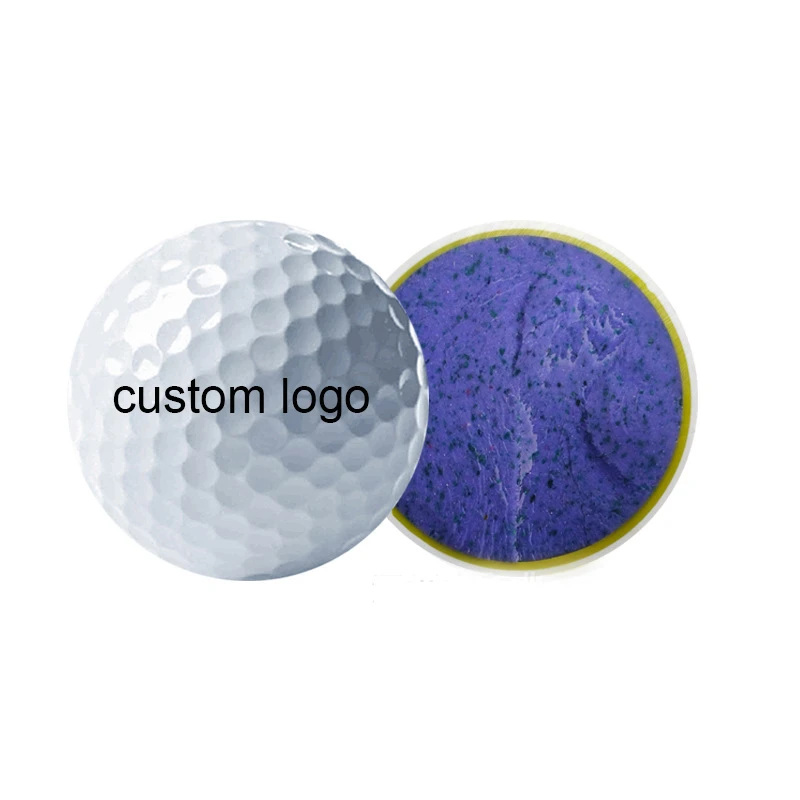
If your goal is to build your own golf ball brand, use these ten brands as positioning references rather than assuming that they are contract manufacturers. You can study their premium, soft-feel, value, or design-led approaches, then ask YHogolf to confirm ball options, sampling, logo application, and packaging around your target market and order requirements.
Whether you select personalization from a recognized brand or develop a private-label program, confirm the following items in writing before sampling or ordering. Minimum order quantities, lead times, print areas, and quality standards must be verified against supplier information and the formal purchase agreement:
- Define the ball’s intended position and use case instead of relying only on broad terms such as “tour ball” or “practice ball.”
- Confirm the logo file, print position, colors, dimensions, and sample-approval method.
- Confirm packaging for individual balls, sleeves, and outer boxes, along with barcode, language, and labeling requirements.
- Document the order quantity, production and delivery plan, shipping method, and change-control points.
- Agree on batch consistency, appearance standards, sampling or inspection methods, and the process for handling nonconforming goods.
For example, an event buyer who compares only brand and unit price, without adding sample approval, logo placement, group packaging, and the required arrival date to the acceptance checklist, may discover too late that the packaging does not support on-site distribution. Writing these conditions into a checklist early makes supplier communication clearer and reduces rework risk.
Frequently Asked Questions
What Is the Most Popular Golf Ball Brand?
When tour exposure, consumer recognition, and influence in the premium golf ball market are considered together, Titleist is usually among the most frequently mentioned brands. However, “most popular” varies by country, channel, player level, and measurement method, so no single survey should be treated as proof of global market share.
Which Golf Ball Brands Are Commonly Used by Professional Golfers?
Titleist, Callaway, TaylorMade, Srixon, and Bridgestone are among the brands commonly seen in professional golf. The exact models used by tour players depend on equipment agreements, testing results, and competition needs. Recreational golfers can learn from the technical positioning without copying a professional’s choice.
Which Golf Ball Brands Offer Good Value for Money?
Srixon, Vice, Maxfli, and Kirkland Signature often enter value discussions, but value depends on local price, availability, and how frequently you lose balls. A lower box price does not create better long-term value if the model is difficult to replenish or does not suit your game.
Does a Beginner Need to Use a Premium Golf Ball Brand?
Beginners usually do not need to start with the most expensive tour ball. A dependable supply, an acceptable feel, and a price that encourages regular practice matter more. Use the same model consistently for a period, then test short-game response and full-round performance as your ball striking improves.
What Should Businesses Check Before Ordering Custom Logo Golf Balls?
Businesses should confirm the intended use, ball positioning, logo file and printed result, sample process, packaging, order quantity, delivery plan, and acceptance method. Minimum quantities, production timing, print areas, and quality standards must be confirmed from supplier documents and project requirements rather than copied as fixed values from a general article.
Final Thoughts
This Top 10 Golf Ball Brands list covers established tour-focused names, online-first and design-led brands, a traditional multi-sport brand, and channel-driven value choices. Titleist, Callaway, TaylorMade, Srixon, and Bridgestone have stronger influence within the golf ball category, while the other brands differentiate through price, design, distribution, or alignment with a broader equipment system.
If you are planning a custom golf ball, event golf ball, or private-label project, organize your target market, use case, budget, quantity, and delivery timing into a requirements list, then discuss feasible options with YHogolf. Confirm all specifications and order conditions through samples and formal documentation.